

Teladoc Health has positioned itself as one of the largest telehealth platforms in the United States, serving millions of members through employer-sponsored benefits, health plan partnerships, and direct-to-consumer services. As virtual care continues reshaping healthcare delivery, understanding the strengths, limitations, and real-world performance of major platforms becomes essential. This Teladoc review draws on official company information, clinical research, consumer feedback, workplace reviews, and industry analysis to provide a comprehensive assessment of the platform's reliability, service quality, and value proposition.
Company Background and Market Position
Teladoc Health operates as a publicly traded telehealth company founded in 2002, well before the COVID-19 pandemic accelerated virtual care adoption. The platform provides video and phone consultations across primary care, mental health, dermatology, and chronic condition management. In 2020, Teladoc acquired Livongo, a digital health company focused on chronic disease management, for approximately $18.5 billion in a deal analyzed by Stanford Graduate School of Business as a strategic bet on integrated virtual care.
The merger aimed to combine acute telehealth visits with continuous remote monitoring for diabetes, hypertension, and other chronic conditions. However, the integration faced financial headwinds. In 2022, Healthcare Dive reported that Teladoc recorded a $6.6 billion impairment charge related to the Livongo acquisition, reflecting market corrections and integration challenges.
Service Offerings and Access Model
Teladoc's platform encompasses several tiers of service:
- General Medical: 24/7 access to board-certified physicians for non-emergency conditions such as respiratory infections, urinary tract infections, and minor injuries
- Mental Health: Licensed therapists and psychiatrists for therapy sessions and medication management
- Dermatology: Asynchronous consultations where patients upload photos for dermatologist review
- Chronic Care Management: Programs for diabetes, hypertension, weight management, and other ongoing conditions (formerly Livongo services)
- Expert Medical Services: Second opinions and specialist consultations for complex diagnoses
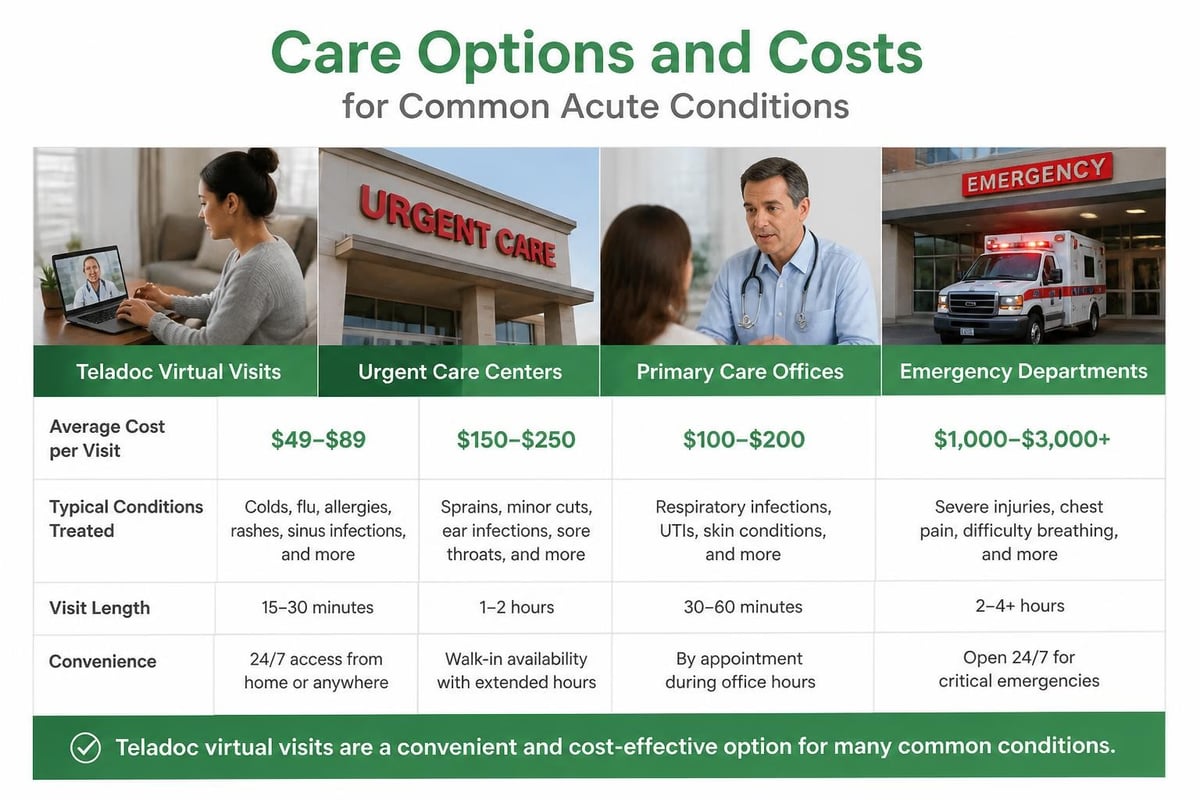
Most users access Teladoc through employer health plans or insurance coverage, with costs ranging from zero copay to $75 per visit depending on plan design. Direct-to-consumer pricing without insurance typically runs $89 for general medical visits.

Clinical Effectiveness and Evidence Base
One critical dimension of any Teladoc review involves examining whether virtual consultations deliver comparable outcomes to traditional in-person care. The AHRQ Effective Health Care Program conducted systematic reviews of telehealth utilization during COVID-19, finding that virtual visits achieved similar clinical outcomes for many conditions, particularly follow-up care, chronic disease management, and behavioral health.
Research published in the Journal of Medical Internet Research compared telephone versus video consultations, revealing nuanced findings about modality effectiveness. Video consultations generally scored higher on patient and clinician satisfaction, yet telephone visits showed comparable clinical outcomes for many diagnoses, with some patients preferring audio-only options for convenience and privacy.
Regulatory Context and Coverage
The CMS overview of Medicare telehealth coverage provides essential context for understanding Teladoc's operational environment. During the COVID-19 public health emergency, Medicare dramatically expanded telehealth reimbursement, allowing providers to deliver care across state lines and receive payment parity with in-person visits. Many of these flexibilities have been extended through 2026, though permanent policy remains under congressional consideration.
For Teladoc, this regulatory framework directly impacts service availability and reimbursement rates. The platform must maintain provider licensure across all states where it operates, navigate varying reimbursement policies, and adapt to evolving telehealth regulations that differ by payer and jurisdiction.
Consumer Feedback Analysis
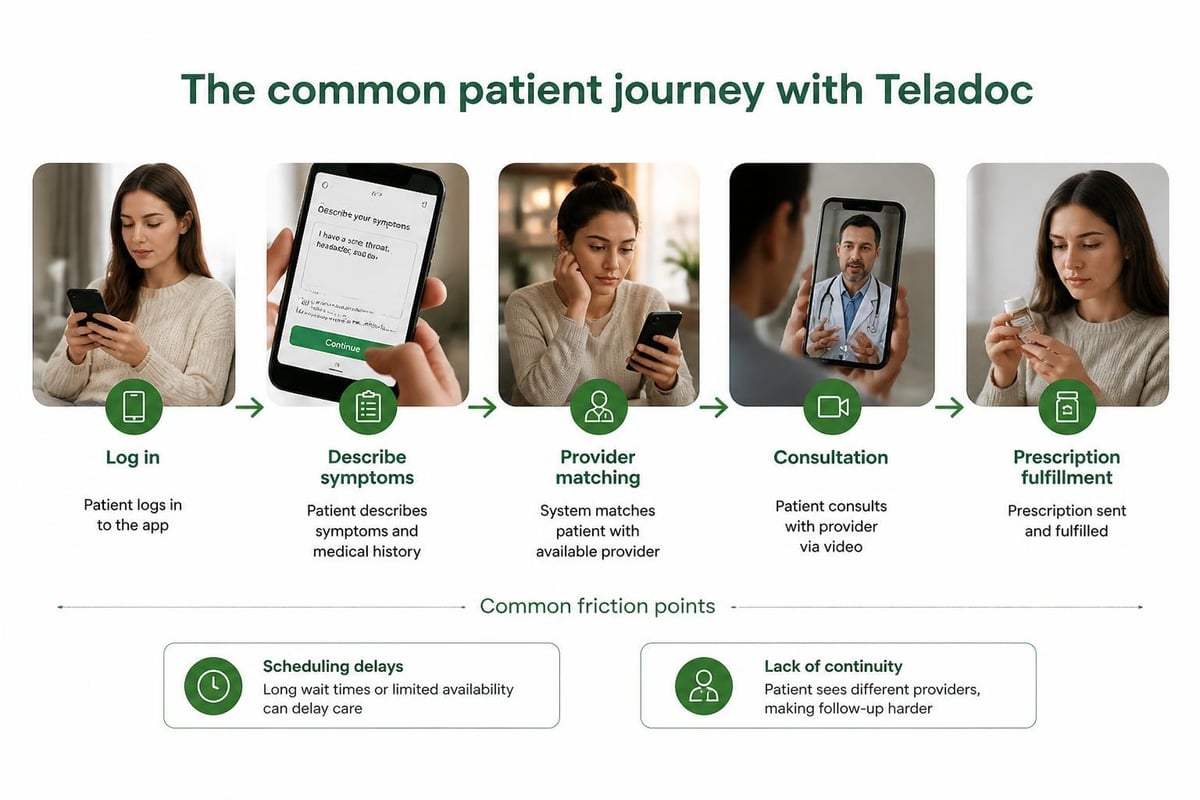
User reviews across multiple platforms reveal a mixed picture of Teladoc's service quality and customer experience. Trustpilot ratings for Teladoc Health show a polarized distribution, with numerous five-star reviews praising convenience and quick access alongside one-star complaints about appointment scheduling, provider quality variability, and billing issues.
Common Positive Themes:
- Rapid appointment availability, often same-day or within hours
- Convenience of avoiding travel and waiting rooms
- Professional and courteous providers in many encounters
- Effective treatment for straightforward acute conditions
- User-friendly mobile app interface
Recurring Complaints:
- Inconsistent provider quality and experience levels
- Difficulty scheduling with the same provider for continuity
- Technical glitches during video consultations
- Prescription limitations and pharmacy coordination problems
- Customer service responsiveness for billing questions
| Feedback Category | Positive Mentions | Negative Mentions | Key Insight |
|---|---|---|---|
| Appointment Access | High volume | Moderate | Fast access valued, but not always with preferred providers |
| Provider Quality | Mixed | High variance | Experience ranges from excellent to inadequate |
| Technical Platform | Generally positive | Occasional issues | App works well most times, failures are frustrating |
| Billing/Insurance | Some praise | Frequent complaints | Complex insurance coordination creates confusion |
Reddit discussions in telehealth communities include posts questioning Teladoc's service quality, with users reporting experiences ranging from helpful consultations to encounters where providers seemed rushed or unfamiliar with patient history. The platform's scale-handling millions of visits annually-inevitably produces variability in provider performance and patient experience.
App Store Reviews and Technical Performance
Apple App Store reviews for Teladoc Health's mobile application show a 4.8 rating based on hundreds of thousands of reviews, indicating generally positive user experiences with the core technology platform. Users frequently commend the intuitive interface, easy appointment booking, and reliable video functionality.
However, negative reviews highlight several technical and operational issues:
- Login and authentication problems preventing access during urgent need
- Push notification failures causing missed appointment reminders
- Video quality degradation on certain network conditions
- Pharmacy integration glitches delaying prescription delivery
- Limited provider bios making it difficult to evaluate clinician qualifications before booking
The app's high overall rating suggests most users complete consultations without major technical barriers, but the subset experiencing issues face significant frustration, particularly when technical failures occur during acute illness.
Workplace Culture and Provider Experience
Employee reviews on Indeed for Teladoc Health offer insights into the organizational culture and work environment that indirectly affect service delivery. Current and former employees report mixed experiences, with compensation and benefits generally rated favorably while work-life balance and management communication receive more critical assessments.
Provider-Specific Observations:
- Clinicians report high patient volume expectations that can limit consultation time
- Compensation structure based partly on visit throughput creates potential quality tensions
- Remote work flexibility appeals to many healthcare professionals
- Electronic health record systems described as functional but not optimized
- Limited face-to-face interaction with colleagues affects professional development
These workplace signals matter for a comprehensive Teladoc review because provider satisfaction, workload, and organizational support directly influence the quality of patient interactions. High-volume expectations may explain user reports of rushed consultations, while compensation models tied to productivity can create misaligned incentives around thorough patient evaluation.
Pricing Transparency and Value Proposition
Teladoc's pricing structure varies significantly based on access channel, creating complexity for consumers evaluating value:
Direct-to-Consumer Pricing (Without Insurance)
| Service Type | Cost per Visit | Typical Response Time |
|---|---|---|
| General Medical | $89 | Same day to 2 hours |
| Mental Health (therapy) | $99-129 | 1-3 days |
| Dermatology | $89 | 24-48 hours |
| Expert Medical Opinion | $125-275 | 3-7 days |
Employer/Insurance Pricing
Most Teladoc users access services through employer-sponsored health plans, where costs range from $0 copay to $49 per visit depending on plan design. This employer-subsidized model provides strong value for covered members but creates access disparities for those without such benefits.
The value equation depends heavily on the comparison point. For minor acute conditions, a $0-49 Teladoc visit compares favorably to urgent care centers charging $100-200 or emergency department visits exceeding $1,000. However, for complex or chronic conditions requiring continuity, episodic virtual visits may prove less valuable than established primary care relationships.
Limitations and Service Boundaries
An honest Teladoc review must acknowledge the inherent limitations of virtual care delivery. Certain clinical scenarios require physical examination, diagnostic testing, or procedural interventions that telehealth cannot provide:
- Complex diagnostic situations needing palpation, auscultation, or specialized testing
- Procedures requiring hands-on intervention
- Emergency conditions such as chest pain, stroke symptoms, or severe injuries
- Pediatric evaluations often benefit from in-person assessment, particularly for young children
- Medication restrictions vary by state, with controlled substances generally excluded from telehealth prescribing
Teladoc's own clinical protocols recognize these boundaries, with providers instructed to refer patients to in-person care when virtual assessment proves insufficient. User complaints sometimes arise when patients expecting comprehensive treatment receive referrals to traditional healthcare settings instead.
Comparison to Alternative Telehealth Platforms
The telehealth market in 2026 includes numerous competitors, each with distinct approaches:
MDLive offers similar 24/7 general medical and behavioral health services with comparable pricing and availability.
Amwell provides both scheduled and on-demand consultations with a focus on specialist access.
Doctor on Demand emphasizes video-first consultations and chronic care programs.
K Health uses AI-powered symptom assessment before connecting patients with physicians.
Teladoc's scale provides geographic coverage and provider availability advantages, but competitors often score higher on user satisfaction metrics related to provider continuity and personalized care. The optimal platform choice depends on specific needs: acute episodic care versus chronic condition management, preference for continuity versus immediate access, and insurance network participation.
Data Privacy and Security Considerations
Healthcare privacy concerns require careful evaluation in any Teladoc review. The platform operates as a covered entity under HIPAA, implementing technical safeguards including encryption, access controls, and audit logging. Privacy policies describe data collection practices, including health information, consultation recordings, and usage analytics.
However, the integration of Livongo's continuous monitoring devices raises additional data considerations. Connected glucometers, blood pressure cuffs, and other devices transmit health metrics to Teladoc's platforms, creating ongoing data streams beyond episodic consultations. Users should understand how this information is stored, analyzed, and potentially shared with employers or health plans sponsoring their coverage.
Third-party data sharing occurs within contractual limits for treatment coordination, payment processing, and healthcare operations. The privacy policy outlines marketing opt-out procedures and data access rights, though navigating these provisions requires careful reading of lengthy legal documents.
Chronic Condition Management Programs
The Livongo acquisition brought dedicated programs for diabetes, hypertension, weight management, and behavioral health to Teladoc's portfolio. These programs combine:
- Connected monitoring devices (glucometers, scales, blood pressure monitors)
- Real-time data transmission and analysis
- Automated coaching tips and intervention alerts
- Human health coach support
- Medication management with physician oversight
Early research on Livongo's diabetes program showed promising engagement and glycemic control improvements among enrolled members. However, the $6.6 billion impairment charge suggests market reception and financial performance fell short of acquisition expectations.
User feedback on chronic care programs reflects mixed experiences. Some members report meaningful engagement with health coaches and appreciate connected device convenience. Others find the programs redundant with existing primary care, experience alert fatigue from frequent notifications, or struggle with device connectivity issues.
Mental Health Service Quality
Behavioral health represents a substantial portion of Teladoc's visit volume, addressing increased demand for accessible mental health care. The platform offers both therapy (licensed counselors and psychologists) and psychiatry (medication management).
Advantages of Teladoc Mental Health:
- Reduced geographic barriers to specialist access
- Scheduling flexibility outside traditional office hours
- Privacy of receiving care from home
- Integration with medical services for holistic treatment
Challenges and Limitations:
- Provider continuity issues when preferred therapists have limited availability
- Some therapeutic modalities benefit from in-person interaction
- Crisis intervention capabilities limited compared to comprehensive mental health systems
- Insurance coverage complexity for behavioral health visits
The effectiveness of teletherapy has been extensively studied, with meta-analyses showing comparable outcomes to in-person therapy for many conditions, particularly depression and anxiety. However, therapeutic alliance-the relationship between patient and provider-remains crucial, and some patients find this harder to establish virtually.
Integration with Traditional Healthcare Systems
A comprehensive Teladoc review should examine how virtual consultations integrate with ongoing primary care relationships. The platform's episodic visit model creates potential care fragmentation:
- Medical records from Teladoc visits may not automatically transfer to primary care providers
- Medication changes made during virtual visits might not be communicated to regular physicians
- Follow-up recommendations from Teladoc providers require patient initiative to implement
- Duplicate testing or treatment may occur without care coordination
Teladoc offers record-sharing capabilities and encourages patients to inform their primary providers about virtual consultations. However, interoperability remains imperfect across disparate health IT systems, placing coordination burden on patients rather than seamless technical integration.
Some health systems have integrated Teladoc as their virtual care vendor, creating better record continuity within those ecosystems. This model represents a more promising approach than entirely disconnected episodic care.
Service Quality Variability Factors
The range of experiences reported in user reviews reflects several structural factors affecting Teladoc service quality:
Provider Network Composition: Teladoc employs both W-2 physicians working exclusively for the company and independent contractors supplementing their practice income. These groups may differ in availability, familiarity with platform protocols, and commitment to virtual care quality.
Visit Volume Pressures: Productivity expectations influence consultation duration and thoroughness. Providers managing high patient volumes face time constraints that may limit patient education and shared decision-making.
Clinical Acuity Matching: The platform's triage algorithms determine which providers see which patients. Mismatches between patient complexity and provider expertise create suboptimal experiences.
State Licensing Patchwork: Providers must maintain licenses in each state where they practice, creating geographic limitations and reducing continuity when patients travel or relocate.
Technology Dependence: Service quality relies on functional video connectivity, which depends on patient internet access, device capability, and platform stability-any weak link degrades the experience.
Teladoc offers convenient access to healthcare services with genuine value for specific use cases, particularly acute conditions and initial mental health consultations, though provider quality variability and continuity challenges limit its effectiveness for complex ongoing care. For comprehensive assessments of Teladoc and other health platforms-aggregating official claims, verified reviews, social feedback, and workplace signals into clear, actionable brand summaries-explore HealthGreenList to make informed decisions about which healthcare services align with your needs and priorities.