

Spring Health has emerged as a prominent player in employer-sponsored mental health benefits, positioning itself as an AI-native platform that connects employees with personalized care. As mental health solutions become increasingly critical in workplace wellness programs, evaluating the trustworthiness and credibility of such platforms becomes essential. This Spring Health review examines the brand through multiple lenses-official claims, peer-reviewed research, customer experiences, community discussions, and employee feedback-to provide a comprehensive assessment of its reliability and effectiveness in 2026.
Quick Verdict
Spring Health appears to be a trustworthy and evidence-backed mental health platform with strong clinical validation, positive employer ROI, and generally favorable user feedback. The company demonstrates transparency through published outcomes data and maintains robust privacy and security standards. While some users report administrative challenges and variable therapist quality, the platform's clinical effectiveness and employer satisfaction rates suggest reliable performance. The brand shows commitment to equity and measurable outcomes, distinguishing itself in the digital mental health space.
What Spring Health Is
Spring Health operates as a comprehensive mental health benefit platform designed primarily for employer-sponsored programs. The platform uses proprietary assessment tools and matching algorithms to connect employees with personalized mental health care, ranging from self-guided digital tools to in-person therapy and medication management.
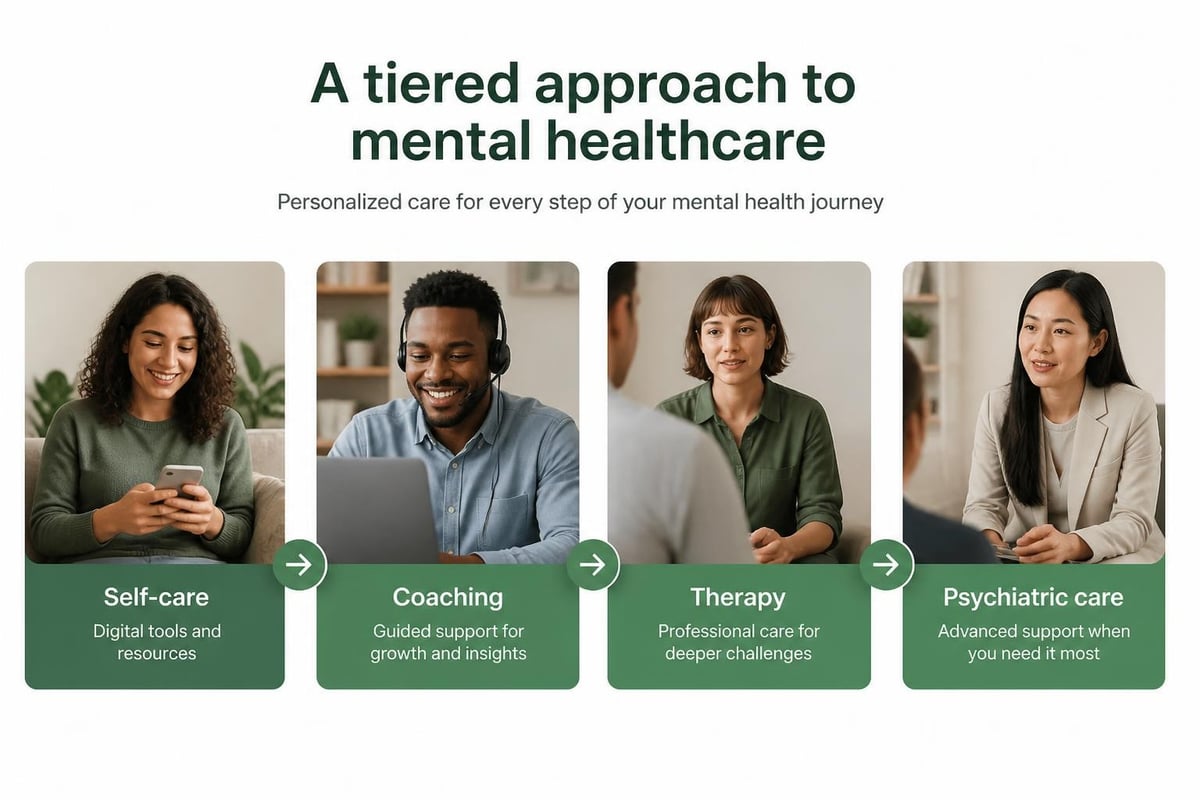
The company's core differentiator centers on its AI-native approach to care matching and personalization. According to Spring Health’s FAQ, the platform begins with a brief assessment that evaluates symptoms, preferences, and clinical needs, then routes users to appropriate care levels. This can include:
- Digital self-care programs and apps
- Text-based coaching
- Video therapy sessions
- In-person therapy
- Psychiatric medication management
- Crisis support services
The platform serves over 450 enterprise clients and has facilitated more than 10 million care episodes since its founding. Spring Health positions itself as an outcomes-focused alternative to traditional Employee Assistance Programs (EAPs) and general mental health platforms.
Clinical Effectiveness and Outcomes Data
Published Research Validation
Spring Health distinguishes itself through peer-reviewed research demonstrating clinical effectiveness. A large-scale outcomes study published in November 2025 measured real-world performance across thousands of users, revealing:
| Outcome Measure | Result |
|---|---|
| Reliable improvement or recovery | 92.3% of participants |
| Clinical remission achieved | 61.7% of participants |
| Study type | Peer-reviewed (OJPHI) |
| Sample size | Large-scale cohort |
These results position Spring Health's measured outcomes favorably compared to traditional mental health interventions. The study's peer-reviewed nature adds credibility beyond self-reported company metrics.
Return on Investment for Employers
Beyond clinical effectiveness, Spring Health has demonstrated economic value. A JAMA Network Open study from February 2025 evaluated the platform's employer-sponsored benefit, finding a 1.9× return on investment. For every $100 invested, employers saved $190 through reduced absenteeism, improved productivity, and lower healthcare costs.
This quantifiable ROI provides employers with evidence-based justification for mental health benefit investments and suggests that the platform delivers tangible workplace value beyond clinical outcomes alone.
Real-World Clinical Applications
A 2026 service evaluation of Spring PTSD examined a guided digital CBT-TF (cognitive behavioral therapy for trauma) delivered within routine NHS practice. The study reported significant reductions in:
- PTSD symptom severity
- Functional impairment
- General psychological distress
The NHS implementation demonstrates Spring Health's adaptability to different healthcare systems and validates effectiveness outside controlled trial environments.
Customer Review Summary
Overall Satisfaction Patterns
Customer reviews across multiple platforms show generally positive sentiment with recurring themes around accessibility and personalized matching. Users frequently praise the platform's ease of use, quick provider matching, and comprehensive care options.
Common positive feedback includes:
- Fast initial assessment and provider matching (typically within 48 hours)
- Wide variety of care modalities and provider specializations
- User-friendly mobile app and scheduling interface
- Responsive customer support for technical issues
- Meaningful clinical improvement for depression and anxiety
Recurring concerns mention:
- Inconsistent therapist quality and engagement levels
- Administrative difficulties with appointment rescheduling
- Limited in-network provider availability in some geographic areas
- Occasional technical glitches in the mobile application
- Variable wait times for specialized care providers
App Store and Platform Ratings
Reviews on Google Play and App Store show average ratings between 4.2 and 4.5 stars, indicating above-average user satisfaction. The most helpful reviews emphasize that outcomes depend significantly on provider matching quality and user engagement with recommended care pathways.
Several reviewers noted that the platform works best when users complete the initial assessment thoroughly and communicate openly about preferences during the matching process. Those who engaged actively with their matched providers reported substantially better outcomes than passive users.

Community Discussion Summary
Reddit and Forum Feedback
Community discussions on Reddit (particularly r/AskHR, r/mentalhealth, and employer-specific subreddits) reveal moderately positive sentiment toward Spring Health as an employer benefit.
Frequently mentioned advantages:
- Better than traditional EAP programs in terms of session limits and provider quality
- Useful for employees who haven't previously accessed mental health care
- Good entry point for identifying appropriate level of care
- Helpful for managing work-related stress and burnout
Common criticisms and concerns:
- Some users prefer their existing therapists and find switching burdensome
- Privacy concerns about employer-sponsored mental health data
- Questions about long-term continuity if changing employers
- Preference for direct insurance coverage rather than platform-mediated care
Quora Discussions
Quora discussions comparing Spring Health to competitors like Lyra Health, Modern Health, and Ginger often position Spring Health favorably for its clinical rigor and outcomes focus. Users discussing platform selection for their organizations frequently cite Spring Health's published research as a differentiating factor.
However, some discussions note that employee adoption depends heavily on how employers communicate the benefit and address privacy concerns. Transparent communication about data usage and confidentiality appears critical for maximizing utilization.
Employee Review Summary
Glassdoor Insights
Glassdoor reviews for Spring Health as an employer show positive overall ratings (typically 4.0-4.3 stars), with employees highlighting mission-driven culture and growth opportunities.
Common positive themes:
- Strong commitment to mental health mission and values
- Collaborative work environment and supportive leadership
- Opportunities for professional development and advancement
- Competitive compensation and comprehensive benefits
- Meaningful work with measurable impact
Recurring employee concerns:
- Rapid growth creating occasional organizational challenges
- Workload intensity during scaling periods
- Some process inefficiencies typical of fast-growing startups
- Variable management quality across different teams
Indeed Feedback
Indeed reviews mirror Glassdoor patterns, with employees appreciating the company's mission while noting growing pains associated with rapid expansion. Customer-facing roles (care navigators, care coordinators) receive particular praise for training quality and clinical supervision.
Several reviews mention that the company practices what it preaches regarding employee mental health support, offering generous mental health benefits to its own workforce and fostering psychologically safe workplace culture.
Privacy, Security, and Trust Standards
Data Protection Practices
Spring Health maintains a comprehensive Global Privacy Notice updated in January 2026 that outlines data collection, processing, sharing, and protection practices. Key privacy commitments include:
- HIPAA compliance for protected health information
- Limited data sharing with employers (only aggregated, de-identified metrics)
- User control over personal health information
- Regular security audits and penetration testing
- Encryption for data in transit and at rest
The company's Trust Policy details security standards, compliance certifications, and institutional safeguards. These documented policies provide transparency beyond what many digital health competitors offer.
Equity and Access Research
A 2026 study examining mental health service equity compared Spring Health's employer benefit to traditional mental health plans. The research found equitable initiation and retention across socioeconomic deprivation levels, suggesting the platform doesn't disproportionately serve only higher-income or higher-education employees.
Additionally, research published in npj Mental Health Research evaluated Spring Health's matching algorithm, provider network characteristics, and user demographics. The large-scale analysis assessed how effectively the platform matches diverse user populations with appropriate providers, finding generally equitable matching across demographic groups.
Main Strengths
This Spring Health review identifies several core strengths that distinguish the platform:
Clinical validation through peer-reviewed research. Unlike many digital health platforms relying solely on internal metrics, Spring Health has published outcomes in respected journals, demonstrating measurable clinical effectiveness with 92.3% of users showing reliable improvement.
Comprehensive care continuum. The platform offers seamless navigation from self-care tools through intensive psychiatric care, avoiding the fragmentation common in traditional mental health systems.
Demonstrated employer ROI. The 1.9× return on investment provides compelling economic justification for employer adoption and suggests sustainable business model alignment with stakeholder interests.
Transparency in privacy and security. Detailed, accessible documentation of data practices and security standards exceeds typical industry disclosure.
Focus on access equity. Published research showing equitable utilization across socioeconomic groups indicates conscious attention to reducing mental health care disparities.
| Strength Category | Supporting Evidence |
|---|---|
| Clinical outcomes | 92.3% improvement rate, peer-reviewed validation |
| Economic value | 1.9× ROI for employers, reduced healthcare costs |
| Privacy standards | HIPAA compliance, detailed privacy policy, third-party audits |
| Access equity | Equitable utilization across deprivation levels |
| Care variety | Digital tools, coaching, therapy, psychiatry in one platform |
Main Concerns
Despite substantial strengths, several concerns emerge across review sources:
Provider quality variability. While matching algorithms perform well on average, individual users report inconsistent therapist engagement and clinical skill levels. Some matched providers appear less experienced or specialized than users expected.
Administrative friction. Rescheduling appointments, switching providers, or navigating billing questions occasionally involves more complexity than the streamlined interface suggests.
Geographic coverage gaps. In-person therapy options remain limited in rural areas and smaller metro markets, despite extensive telehealth availability.
Privacy perception challenges. Even with robust technical safeguards, some employees remain hesitant about employer-sponsored mental health benefits due to perceived privacy risks. According to internal research on barriers to mental health care, awareness and benefit design significantly affect utilization.
Continuity concerns. Users changing employers may lose access to established therapeutic relationships, creating treatment discontinuity that could undermine long-term outcomes.

Final Verdict
This comprehensive Spring Health review reveals a trustworthy, evidence-backed mental health platform that delivers measurable clinical outcomes and economic value. The company's commitment to transparency through peer-reviewed research, detailed privacy documentation, and equity-focused design distinguishes it from many competitors in the crowded digital mental health space.
The platform performs particularly well for:
- Organizations seeking outcomes-validated mental health benefits
- Employees new to mental health care who benefit from guided navigation
- Users comfortable with digital-first care pathways
- Employers requiring demonstrable ROI for wellness investments
However, individuals with established therapeutic relationships, those in underserved geographic areas, or users prioritizing maximum provider choice may find the platform's structured approach limiting.
The balance of evidence suggests Spring Health represents a credible, effective option for employer-sponsored mental health benefits, with clinical effectiveness supported by peer-reviewed research and generally positive user experiences. The brand demonstrates institutional trustworthiness through transparent practices, published outcomes, and attention to privacy and equity concerns.
For organizations evaluating mental health benefit partners, Spring Health's combination of clinical validation, economic ROI, and comprehensive care continuum positions it as a strong contender worthy of serious consideration. Individual users should weigh the platform's structured, evidence-based approach against personal preferences for provider selection autonomy and care delivery modality.
Sources Checked
This Spring Health review incorporated information from the following verified sources:
- Official website: springhealth.com (company claims, service descriptions, FAQ)
- Peer-reviewed research: OJPHI outcomes study (2025), JAMA Network Open ROI study (2025), npj Mental Health Research matching algorithm evaluation (2026), PubMed equity study (2026), service evaluation of Spring PTSD (2026)
- Privacy and security documentation: Global Privacy Notice, Trust Policy
- User review platforms: Google Play, App Store (customer experience feedback)
- Community forums: Reddit discussions (r/AskHR, r/mentalhealth, employer-specific subreddits), Quora (platform comparisons)
- Employee review sites: Glassdoor, Indeed (workplace culture and employer practices)
- Company blog: Spring Health blog (internal research on access barriers)
All sources clearly reference the same Spring Health mental health platform company. No similar-name or lookalike brands were conflated with the reviewed entity.
Spring Health demonstrates strong trustworthiness through peer-reviewed clinical validation, transparent privacy practices, and measurable outcomes, while user feedback suggests generally positive experiences with some administrative and provider quality variability. If you're evaluating mental health platforms or other health and wellness brands, HealthGreenList aggregates official claims, customer reviews, community discussions, and workplace signals to help you quickly assess credibility and make informed decisions about which health brands you can trust.