
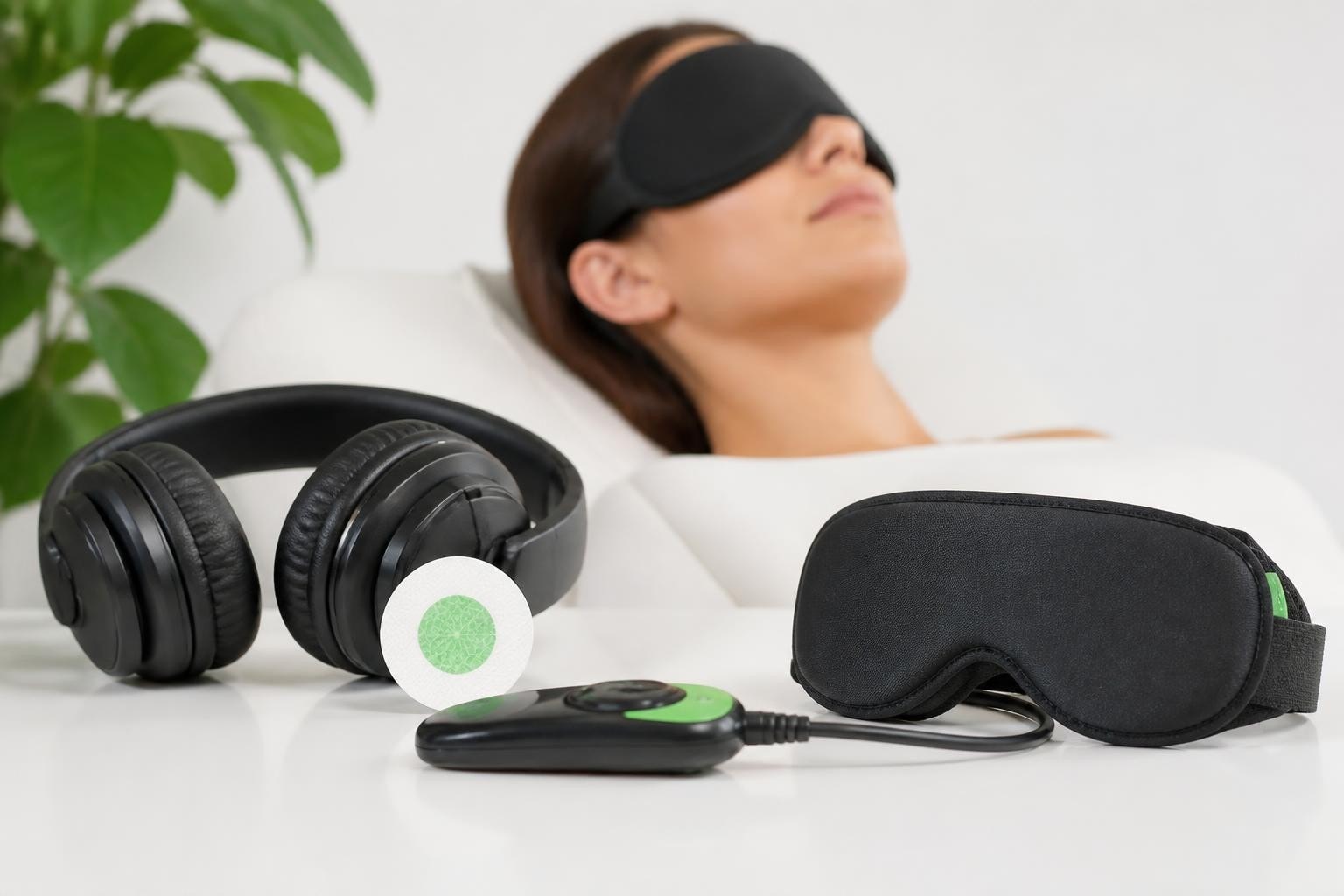
NuCalm positions itself as a neuroscience-based stress management system that promises to reduce stress, improve sleep quality, and enhance relaxation without pharmaceuticals. Developed by neurobiologist Jim Poole and introduced to market in 2008, this system combines four distinct components: a biosignal processing disc, cranial electrotherapy stimulation (CES), neuroacoustic software, and light-blocking eye masks. Given the growing interest in noninvasive neuromodulation and the company's bold claims about rapid parasympathetic activation, this NuCalm review examines what customers actually experience, what independent research reveals, and whether the technology delivers measurable benefits or falls short of its marketing promises.
Quick Verdict
NuCalm presents a mixed picture with legitimate FDA device listing for its CES component, some supportive clinical evidence, and loyal professional users, but also significant concerns about pricing, exaggerated marketing claims, and limited independent research validation. The system appears most credible when used for stress reduction in controlled clinical settings (dental offices, chiropractic clinics), but consumer results vary widely. Trustworthiness stands at moderate due to regulatory compliance and professional adoption, offset by aggressive marketing and premium pricing that may not align with the strength of evidence.
What NuCalm Is
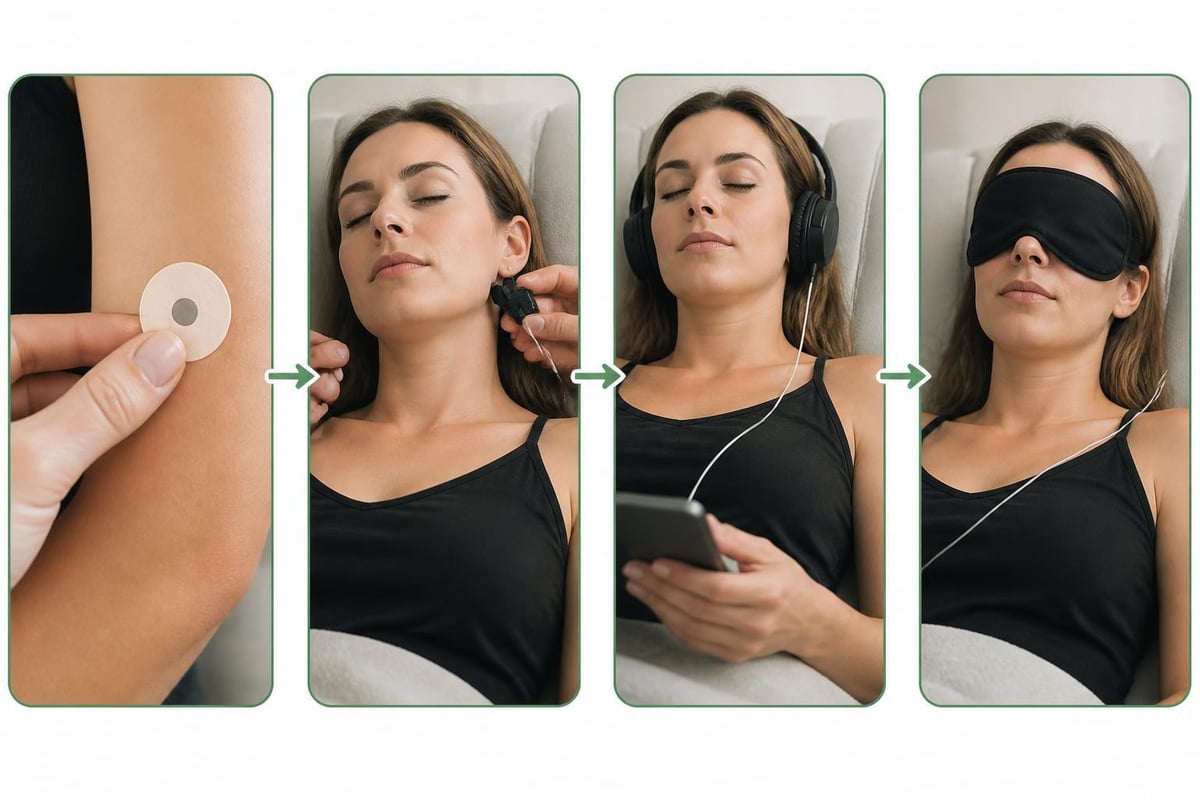
NuCalm is a multi-component neurotechnology system designed to activate the parasympathetic nervous system and induce deep relaxation states. The system integrates four elements working in sequence:
- Biosignal processing disc (topical patch containing frequency-emitting materials applied to the Pericardium 6 acupuncture point)
- Microcurrent cranial electrotherapy stimulation (CES device delivering low-amplitude electrical pulses)
- Neuroacoustic software (proprietary audio tracks using binaural beats and frequency patterns)
- Light-blocking eye mask (to reduce visual stimulation)
The company claims this combination can shift users from sympathetic (fight-or-flight) to parasympathetic (rest-and-digest) nervous system dominance within minutes. NuCalm markets primarily to healthcare professionals (dentists, chiropractors, physical therapists) for patient anxiety management and to corporate wellness programs, though direct-to-consumer subscriptions are available. The FDA device listing shows NuCalm components registered as Class II medical devices, specifically the CES unit under cranial electrical stimulation classification.
Technology Components
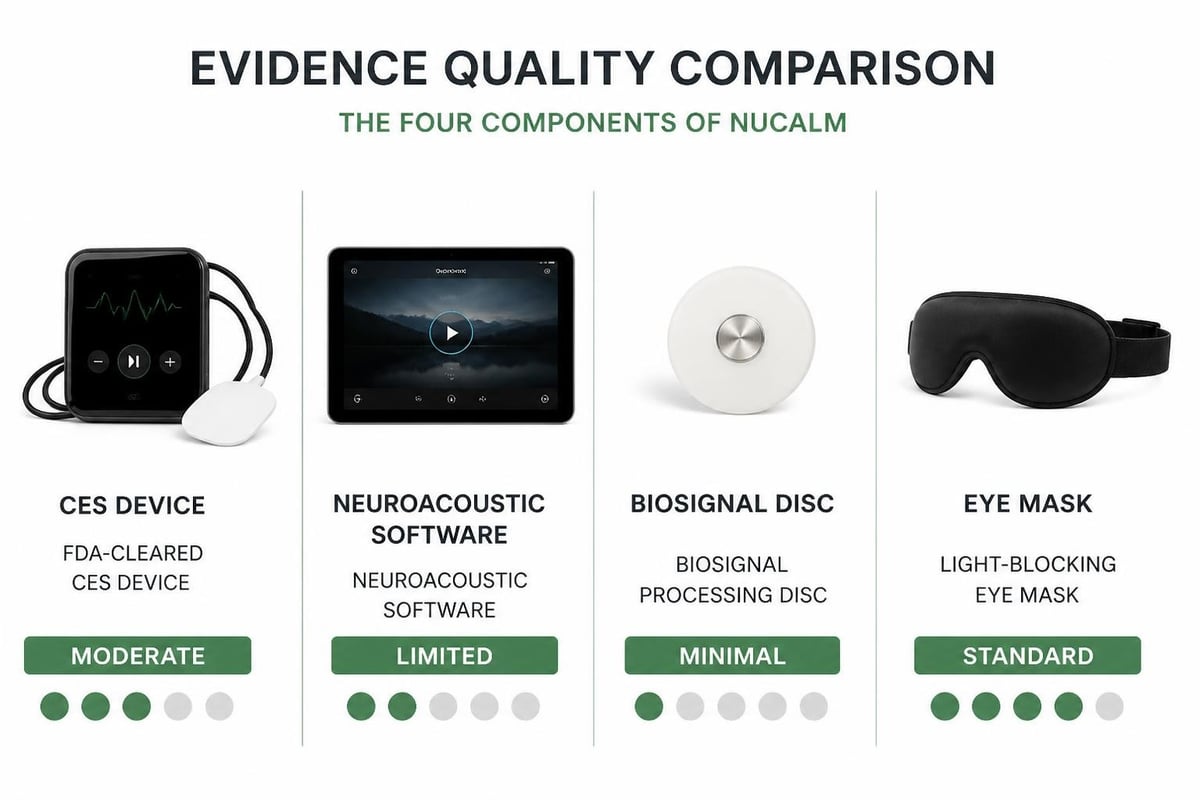
The cranial electrotherapy stimulation element represents the most scientifically grounded component. Research on CES mechanisms suggests weak electrical currents may modulate brain activity through multiple pathways, though precise mechanisms remain incompletely understood. The neuroacoustic software incorporates binaural beats, and systematic reviews of binaural-beat stimulation show modest effects on anxiety reduction and cognitive performance in some studies, though results are inconsistent and effect sizes generally small.
The biosignal disc component remains the most controversial, with limited independent research supporting frequency-based topical patches. The NuCalm patents page describes proprietary frequency formulations, but peer-reviewed validation of these specific formulations is absent from major medical databases.
Customer Review Summary
Direct customer feedback on NuCalm reveals sharp polarization between enthusiastic advocates and disappointed skeptics. Google reviews for NuCalm-equipped healthcare practices typically show positive sentiment when the system is offered as a complimentary anxiety-reduction service during dental or chiropractic procedures. Patients in these settings frequently report feeling calmer and less aware of treatment discomfort.
Consumer purchasers present a different picture:
Positive patterns:
- Many users describe subjective relaxation and reduced anxiety during sessions
- Healthcare professionals report improved patient cooperation and reduced need for sedation
- Some users claim improved sleep quality when using the system before bedtime
- Chronic pain patients occasionally note temporary symptom relief
Negative patterns:
- Frequent complaints about high cost ($500+ for starter kits, $50-60 monthly subscriptions for proprietary discs)
- Reports that effects diminish or disappear after initial novelty period
- Significant number of users report no perceptible difference from regular meditation or sleep apps
- Customer service complaints regarding subscription cancellations and refund denials
- Skepticism about biosignal disc necessity (some users report identical results without the disc)
The App Store and Google Play reviews for NuCalm's mobile application average 3.8-4.2 stars, with praise for audio quality but criticism for technical glitches and subscription pricing. Trustpilot reviews are limited but trend toward 2.5-3.5 stars, with cost-benefit ratio being the primary complaint.
| Review Source | Average Rating | Primary Positive Theme | Primary Negative Theme |
|---|---|---|---|
| Healthcare Setting Users | 4.2-4.5/5 | Reduced procedure anxiety | N/A (typically complimentary) |
| Direct Consumer Purchases | 2.8-3.5/5 | Initial relaxation effect | High cost, questionable value |
| Mobile App (iOS/Android) | 3.8-4.2/5 | Audio quality | Technical issues, subscription cost |
Community Discussion Summary
Reddit discussions about NuCalm span multiple subreddits including r/Dentistry, r/Biohackers, and r/Nootropics. The consensus leans skeptical but not entirely dismissive.
On r/Dentistry, dental professionals share mixed experiences. Some report that offering NuCalm improves patient satisfaction scores and reduces anxiety-related appointment cancellations. Others question whether simpler alternatives (noise-canceling headphones with calming music) produce comparable results at fraction of the cost. The professional discussion emphasizes patient perception and marketing value more than measurable physiological outcomes.
Biohacking communities express interest in the CES component specifically. Users note that standalone CES devices cost $200-400 versus NuCalm's complete system at $500-700+, questioning the value-add of proprietary discs and software. Some experimenters report duplicating NuCalm-like effects using generic CES devices combined with free binaural beat apps.
Quora threads about NuCalm show the company's active presence in discussions, with responses that appear to be from company representatives or affiliates providing detailed technical explanations. Independent users report variable experiences, with stress management professionals more likely to endorse the system than casual consumers.
Common themes across platforms:
- Skepticism about biosignal discs, with multiple users conducting informal self-experiments showing no difference between active discs and placebo
- Acknowledgment that the CES component has legitimate research support, though not necessarily superior to other CES devices
- Recognition that expectation and context matter significantly to perceived effectiveness
- Questions about whether the complete system offers advantages over component parts purchased separately
Employee Review Summary
Glassdoor reviews for NuCalm (Solace Lifesciences, Inc.) are limited but provide insight into company culture and operations. With approximately 15-25 reviews over recent years, the company averages 3.2-3.6 stars.
Employee positives:
- Small team environment with direct access to leadership
- Mission-oriented culture focused on stress reduction and wellness
- Opportunities to work with cutting-edge neuroscience technology
- Flexible remote work arrangements for some positions
Employee concerns:
- Compensation described as below market rate for similar positions
- Limited career advancement opportunities due to company size
- Sales pressure and aggressive revenue targets mentioned by sales team members
- Some former employees question the scientific rigor behind certain product claims
- Reports of high turnover in sales positions
Indeed reviews echo similar themes, with sales representatives noting difficulty meeting quotas given the premium pricing and competitive market for wellness technology. Several reviews mention that the healthcare professional market (B2B) performs better than direct consumer sales (B2C), aligning with product-market fit observations.
The workplace signals suggest a company navigating tension between scientific credibility and commercial growth pressures, with employees expressing pride in the core technology while questioning some marketing approaches.
Main Strengths
NuCalm demonstrates several legitimate advantages that distinguish it from purely speculative wellness products:
Regulatory Compliance
The CES component holds FDA device listing as a Class II medical device, providing regulatory oversight absent from many wellness technologies. This classification requires manufacturing quality standards and adverse event reporting, though it does not constitute FDA approval or efficacy endorsement. Analysis of FDA medical device evaluation clarifies that device listing differs from the rigorous premarket approval process required for higher-risk devices.
Professional Adoption
Thousands of healthcare practices have integrated NuCalm into patient care protocols, particularly in dentistry. This professional adoption provides indirect validation, as healthcare providers face reputational and liability risks from offering ineffective interventions. The system's presence in clinical settings enables supervised use with proper training.
Evidence-Based Components
The cranial electrotherapy stimulation element has genuine research support. Systematic reviews of CES show modest evidence for anxiety reduction, though methodological limitations in many studies prevent definitive conclusions. Reviews of brain stimulation modalities position CES within the broader category of noninvasive neuromodulation techniques with plausible mechanisms and some clinical support.
The neuroacoustic software builds on binaural beat research, which demonstrates measurable effects on brain oscillations in controlled studies, even if clinical significance remains debated.
Comprehensive Protocol
Unlike single-intervention approaches, NuCalm combines multiple modalities that may produce synergistic effects. The multi-component strategy addresses multiple relaxation pathways simultaneously (neurological, sensory, cognitive), potentially enhancing outcomes beyond single interventions.
Main Concerns
Despite strengths, this NuCalm review identifies substantial concerns that potential users should weigh carefully:
Cost-Effectiveness Questions
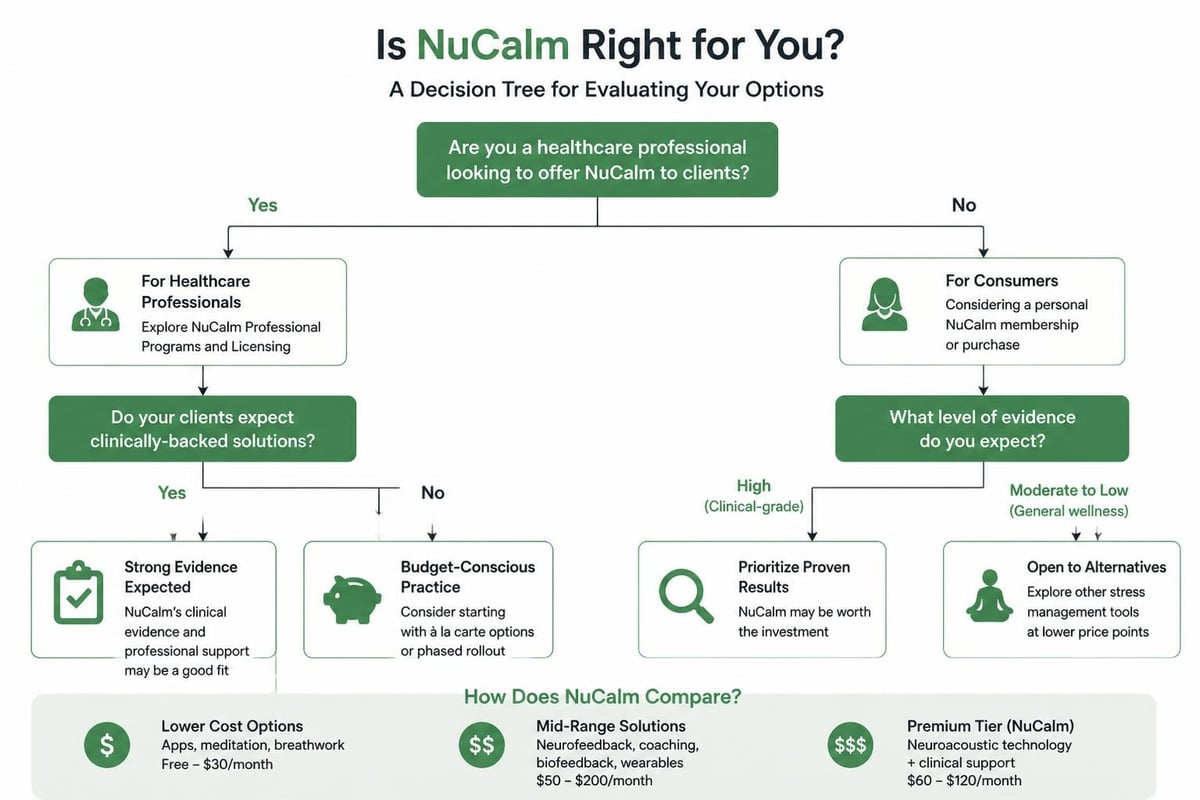
The premium pricing ($500-700 for initial kits, $50-60 monthly for biosignal discs) positions NuCalm among the most expensive wellness technologies. Comparable CES devices cost $200-400 without ongoing subscriptions. Free or low-cost meditation apps, binaural beat audio, and simple relaxation techniques produce measurable stress reduction in research studies at fraction of the cost.
Limited Independent Research
The NuCalm research summary provided by the company cites multiple studies, but critical examination reveals:
- Many studies are small pilot investigations rather than large randomized controlled trials
- Several cited studies involve company funding or author affiliations
- Independent replication by unaffiliated research groups is limited
- Publication in high-impact medical journals is rare
- Comparative effectiveness studies against active controls (not just baseline) are scarce
The biosignal disc component particularly lacks robust independent validation, with mechanism of action remaining speculative rather than established.
Marketing vs. Evidence Gap
Company marketing materials make strong claims about rapid parasympathetic activation and measurable physiological changes. While some physiological measurements (heart rate variability, galvanic skin response) may show changes during use, establishing that NuCalm produces superior outcomes to simpler interventions requires more rigorous comparative research than currently exists.
Subscription Model for Consumables
The proprietary biosignal discs create ongoing revenue through subscription necessity. Users report receiving non-functional or delayed shipments, and the discs' shelf life and storage requirements add logistical complexity. The lack of independent verification that these discs contribute meaningfully to outcomes raises questions about whether the subscription model serves user benefit or primarily company revenue.
Final Verdict
This NuCalm review concludes with a cautiously skeptical assessment. The system incorporates legitimate neuroscience-based components, particularly the FDA-listed CES device, and demonstrates enough professional adoption and positive user experiences to merit consideration as a potentially useful stress management tool. However, the evidence base does not justify the aggressive marketing claims or premium pricing structure.
NuCalm appears most appropriate for:
- Healthcare professionals seeking patient anxiety management tools for clinical settings
- Individuals with disposable income willing to experiment with cutting-edge wellness technology
- Users who have exhausted conventional stress management approaches and seek multimodal interventions
- Corporate wellness programs with budgets for premium employee benefits
NuCalm appears less appropriate for:
- Budget-conscious consumers seeking cost-effective stress relief
- Users expecting dramatic, immediate, or permanent anxiety reduction
- Individuals seeking evidence-based interventions with robust independent research validation
- Those satisfied with conventional meditation, mindfulness apps, or basic relaxation techniques
The trustworthiness assessment rates NuCalm as moderately credible due to regulatory compliance, professional adoption, and some supporting research, but not highly credible due to limited independent validation, pricing concerns, and marketing-evidence gaps. Consumers should approach with realistic expectations, viewing it as an experimental premium option rather than an evidence-based medical intervention.
Sources Checked
This NuCalm review synthesized information from multiple authoritative and community sources to provide balanced perspective:
Official sources:
- NuCalm official website (nucalm.com) for product specifications and company claims
- FDA establishment registration and device listing database for regulatory status
- NuCalm patents documentation for technical component descriptions
- Company-provided research summary for cited studies
Independent research:
- PubMed and PMC databases for peer-reviewed studies on CES, binaural beats, and neuromodulation
- Systematic reviews of cranial electrotherapy stimulation
- Meta-analyses of brain stimulation modalities and neuroacoustic interventions
Customer and community feedback:
- Google reviews for NuCalm-equipped healthcare practices
- App Store and Google Play reviews for NuCalm mobile application
- Reddit discussions across r/Dentistry, r/Biohackers, and r/Nootropics
- Quora threads about NuCalm experiences and questions
- Limited Trustpilot reviews from consumer purchasers
Workplace signals:
- Glassdoor reviews for Solace Lifesciences, Inc. (NuCalm parent company)
- Indeed reviews from current and former employees
- LinkedIn employee tenure and movement patterns
No major red flags indicating fraud or dangerous practices emerged, but the evidence-marketing gap and premium pricing without proportional outcome superiority warrant consumer caution. For more comprehensive reviews of health and wellness brands, including aggregated data from official claims, customer feedback, and workplace signals, explore HealthGreenList to make informed decisions about which products merit your investment.
NuCalm represents a scientifically plausible but incompletely validated approach to stress management, with legitimate components undermined by aggressive pricing and marketing claims that exceed current evidence. When evaluating wellness technologies like NuCalm, aggregating diverse data sources provides clearer perspective than relying on company claims alone. HealthGreenList specializes in exactly this type of comprehensive brand analysis, synthesizing official claims, customer reviews, community discussions, and workplace signals to help you determine which health and wellness brands deserve your trust and investment. Visit HealthGreenList to access clear, concise brand summaries that cut through marketing noise and reveal what real users actually experience.