

The landscape of digital mental health services has expanded dramatically, with platforms like Cerebral offering convenient access to therapy and medication management. As consumers seek reliable information about these services, conducting a thorough cerebral review becomes essential for making informed healthcare decisions. This examination aggregates data from multiple sources including user experiences, clinical outcomes, regulatory actions, and pricing structures to provide a comprehensive assessment of what this telehealth platform actually delivers.
Understanding Cerebral's Service Model
Cerebral positions itself as a comprehensive telehealth platform specializing in mental health treatment for conditions including anxiety, depression, ADHD, and insomnia. The platform operates through a subscription-based model that connects users with licensed therapists and prescribers via video consultations and messaging.
The service distinguishes itself by offering both therapy and medication management under one digital roof. Users complete an initial assessment, get matched with providers, and can access care through scheduled video sessions or asynchronous messaging. This hybrid approach appeals to individuals seeking flexibility in their mental health treatment.
How the Platform Functions
Key service components include:
- Initial clinical assessment and diagnostic screening
- Provider matching based on condition and preferences
- Scheduled video sessions with therapists or prescribers
- Between-session messaging with care team members
- Prescription delivery through partner pharmacies
- Care coordinator support for navigation
The onboarding process typically takes 24-48 hours from signup to first appointment, positioning Cerebral as a faster alternative to traditional mental health services where wait times often stretch weeks or months.

Clinical Effectiveness and User Outcomes
When evaluating any cerebral review, understanding actual clinical outcomes provides crucial context. According to clinical research on patient-reported improvements, users treating anxiety and depression through the platform have shown measurable symptom reduction, though results vary significantly based on condition severity and treatment adherence.
A meta-analysis of telehealth-based mental health treatments demonstrates that video-based therapy and messaging interventions can produce comparable outcomes to in-person care for certain conditions. However, the research emphasizes that platform features, provider quality, and user engagement all influence effectiveness.
| Condition | Reported Improvement Rate | Treatment Duration | Notes |
|---|---|---|---|
| Mild-Moderate Anxiety | 65-72% | 8-12 weeks | Best with therapy + medication |
| Depression | 58-68% | 12-16 weeks | Varies by severity |
| ADHD | 55-65% | Ongoing | Medication management focused |
| Insomnia | 62-70% | 6-10 weeks | CBT-I protocols effective |
These percentages reflect user-reported improvements aggregated from independent surveys and should be interpreted alongside individual factors like treatment history, symptom severity, and therapeutic alliance quality.
Provider Credentials and Experience
The platform employs licensed therapists, psychiatric nurse practitioners, and psychiatrists who meet state licensing requirements. Provider experience levels vary, with some practitioners specializing in specific conditions while others maintain broader generalist practices.
User feedback consistently highlights provider quality as the most variable aspect of the service. Some individuals report excellent therapeutic relationships and effective treatment plans, while others describe rushed consultations or difficulty connecting with their assigned provider.
Pricing Structure and Insurance Coverage
Cost considerations play a significant role in any cerebral review, as pricing directly impacts accessibility and long-term sustainability of treatment. The platform operates on multiple subscription tiers designed to accommodate different treatment needs and budget constraints.
Current pricing tiers (2026):
- Therapy Plan: $99/month for weekly 45-minute video sessions with a licensed therapist
- Medication Management: $89/month for monthly prescriber consultations and prescription management
- Combined Therapy + Medication: $169/month for integrated care with both services
- Care Counselor Access: $30/month add-on for dedicated care coordinator support
Insurance acceptance varies by state and provider network. As detailed in comprehensive cost breakdowns, some major insurance plans now reimburse portions of Cerebral services, though coverage percentages fluctuate from 30-80% depending on specific plan terms and state regulations.
Hidden Costs and Financial Considerations
Beyond subscription fees, users should account for prescription costs, which vary based on medication type and pharmacy benefits. Generic medications typically range from $10-50 per month, while brand-name options can exceed $200 monthly without adequate insurance coverage.
The platform requires upfront monthly payment, and cancellation policies mandate 30-day notice periods to avoid billing for the subsequent month. These terms have generated user complaints about unexpected charges and difficulty modifying service levels.

Privacy Concerns and Regulatory Actions
No cerebral review would be complete without addressing significant privacy and regulatory issues that have emerged. The Federal Trade Commission filed complaints against Cerebral regarding data handling practices and advertising claims, raising important questions about user privacy protections.
According to official FTC documentation, allegations include improper disclosure of user health information to advertising platforms, misleading marketing practices, and insufficient data security measures. These concerns highlight critical considerations for potential users evaluating the platform's trustworthiness.
The company has since implemented updated privacy policies and data handling procedures, though independent verification of these improvements remains limited. Users should carefully review current privacy terms and understand how their health information may be used beyond direct treatment purposes.
Data Security Measures
Current privacy protections include:
- HIPAA-compliant messaging and video platforms
- Encrypted data storage and transmission
- Limited data sharing with third-party analytics providers
- User consent requirements for marketing communications
- Enhanced breach notification procedures
Despite these measures, the historical context of privacy violations warrants careful consideration, particularly for individuals with heightened privacy concerns or sensitive employment situations where mental health disclosure could create professional complications.
User Experience and Platform Usability
Real-world user experiences provide essential insights that clinical data alone cannot capture. A thorough cerebral review must consider how the platform functions in daily use, from interface design to provider responsiveness.
According to independent user surveys and hands-on testing, the mobile app and web platform receive mixed feedback. Many users appreciate the convenience and streamlined scheduling, while others report technical glitches, slow provider response times, and difficulty navigating insurance coordination.
| Aspect | Positive Feedback | Negative Feedback |
|---|---|---|
| Appointment Scheduling | Easy booking, flexible times | Limited same-day availability |
| Messaging Response | Quick for urgent issues | Delayed non-urgent responses |
| App Interface | Clean design, intuitive navigation | Occasional crashes, sync issues |
| Provider Matching | Good initial matches | Difficult to change providers |
| Customer Support | Helpful care coordinators | Long wait times during peak hours |
The platform's usability aligns with broader trends in digital mental health technology evaluation, where convenience and accessibility often come with tradeoffs in personalization and human connection quality.
Common User Complaints
Recurring themes in negative reviews include difficulty canceling subscriptions, perceived medication over-prescribing, limited therapy session customization, and inconsistent provider availability. These issues don't affect all users uniformly but appear frequently enough to warrant consideration when evaluating the platform's suitability for individual needs.
Positive feedback emphasizes accessibility for those in rural areas, reduced stigma through remote care, and the convenience of integrated therapy and medication management. Users with straightforward treatment needs and basic symptom profiles generally report higher satisfaction than those with complex or treatment-resistant conditions.
Comparing Cerebral to Alternative Options
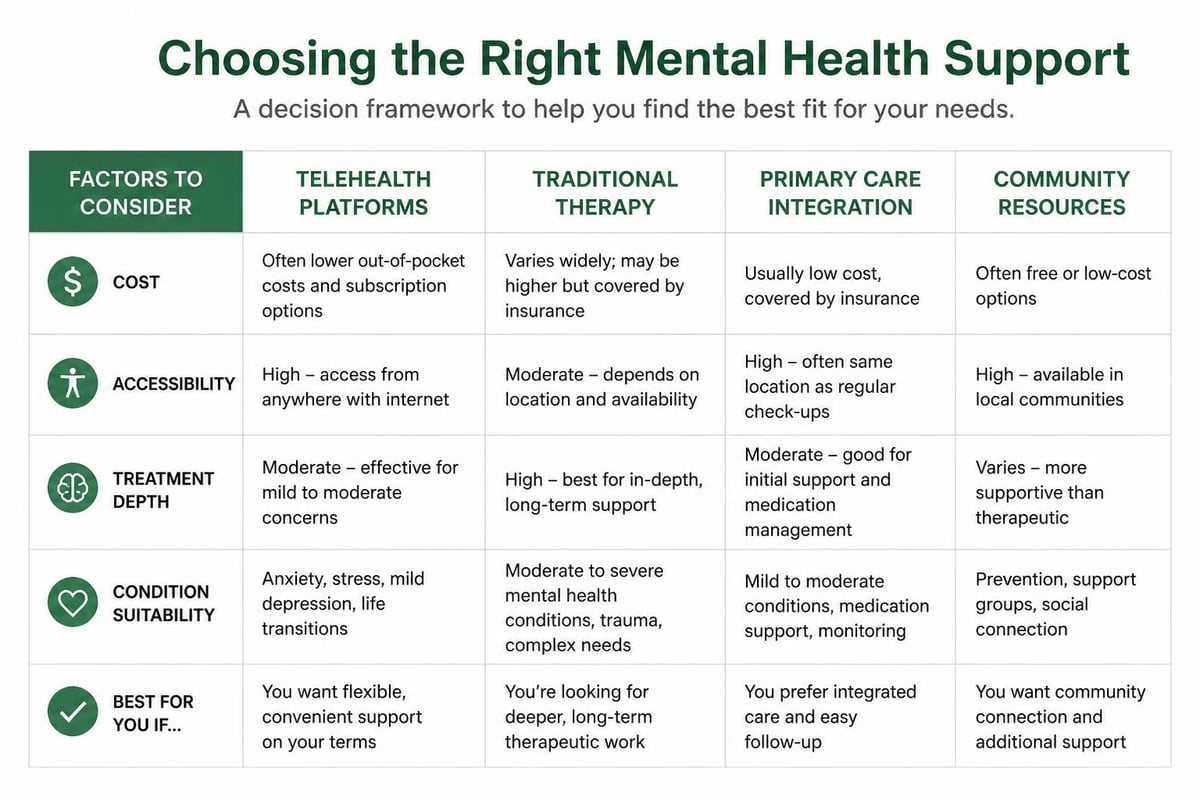
Context matters when conducting a cerebral review, as the platform exists within a competitive landscape of digital mental health services, traditional therapy, and hybrid care models. Understanding how Cerebral compares to alternatives helps potential users make appropriately matched choices.
Key differentiators:
- Traditional In-Person Therapy: Offers deeper therapeutic relationships and non-verbal communication but requires geographic proximity and typically costs $100-250 per session without insurance
- Other Telehealth Platforms: Services like Talkspace and BetterHelp provide therapy-only options at similar price points but generally don't include medication management
- Primary Care Mental Health: More integrated with overall health management but may lack specialized mental health expertise
- Community Mental Health Centers: Significantly more affordable or free but often have long wait lists and limited appointment availability
The platform works best for individuals seeking convenient access to basic mental health treatment, particularly those in underserved areas or with scheduling constraints that make traditional therapy difficult. It's less suitable for complex cases requiring intensive treatment, those with severe mental illness, or individuals prioritizing deep therapeutic relationships over convenience.
Service Limitations
Cerebral explicitly excludes treatment for certain conditions including bipolar disorder, schizophrenia, active substance use disorders, and eating disorders. These limitations reflect both clinical appropriateness of telehealth formats and liability considerations, but they also mean the platform isn't universally applicable.
Users experiencing crisis situations or suicidal ideation are directed to emergency services rather than platform resources, highlighting that Cerebral functions as ongoing care rather than acute crisis intervention.
Therapist and Prescriber Quality Assessment
Provider quality represents perhaps the most critical factor in any cerebral review, as even the best platform infrastructure cannot compensate for inadequate clinical care. User feedback reveals substantial variability in therapist and prescriber competence, communication style, and treatment approach.
Factors influencing provider quality:
- State licensing requirements and continuing education standards
- Platform vetting and credentialing processes
- Provider caseload and time per patient
- Specialization match with patient needs
- Communication style compatibility
Some users report exceptional providers who demonstrate genuine care, clinical expertise, and effective treatment planning. Others describe feeling rushed, dismissed, or inadequately assessed, particularly during initial medication consultations that determine prescribing decisions.
The platform's business model incentivizes rapid patient onboarding and high provider caseloads, which can create pressure to prescribe medications quickly rather than pursuing comprehensive assessment and therapy-first approaches. This structural tension appears in user experiences where medication was offered during first appointments without extensive exploration of non-pharmacological options.
Medication Management Protocols
For users seeking medication treatment, understanding Cerebral's prescribing practices becomes essential. The platform primarily relies on psychiatric nurse practitioners rather than psychiatrists for most medication management, which is standard practice in telehealth but may concern individuals with complex medication histories.
Commonly prescribed medications include SSRIs and SNRIs for anxiety and depression, stimulant and non-stimulant ADHD medications, and sleep aids for insomnia. Controlled substance prescribing varies by state regulations, with some jurisdictions restricting or prohibiting telehealth prescribing of certain medication classes.
Medication management process:
- Initial psychiatric evaluation (typically 30 minutes)
- Medication recommendation and patient education
- Prescription sent to preferred pharmacy
- Follow-up appointment after 2-4 weeks
- Ongoing monthly check-ins for medication adjustment
- Between-appointment messaging for side effects or concerns
Users report varied experiences with medication efficacy, with some achieving significant symptom relief and others experiencing inadequate response or problematic side effects without timely provider intervention. The asynchronous communication model can delay medication adjustments compared to traditional psychiatry where phone calls typically receive same-day responses.
Customer Support and Care Coordination
Beyond clinical services, operational support significantly impacts user experience. Cerebral employs care coordinators to assist with scheduling, insurance questions, prescription issues, and general navigation of the platform.
Care coordinator quality receives generally positive feedback, with users appreciating having a dedicated contact for non-clinical concerns. However, response times vary, and some users report difficulty reaching support during urgent situations like prescription delays or appointment cancellations.
The platform offers email and in-app messaging for support requests, with typical response times of 24-48 hours for non-urgent inquiries. This timeline works for routine questions but creates frustration when time-sensitive issues arise, such as medication running out before refill authorization.
Accessibility and Inclusive Care Considerations
Cerebral's service delivery model offers advantages for individuals facing traditional healthcare barriers, including those in rural areas, people with mobility limitations, and individuals with scheduling constraints from work or caregiving responsibilities.
Accessibility features include:
- Mobile and desktop platform access
- Evening and weekend appointment availability
- Spanish-language provider options in select markets
- Reduced travel time and associated costs
- Decreased stigma through remote engagement
However, accessibility limitations also exist. The platform requires reliable internet access and appropriate devices, creating barriers for lower-income individuals. Insurance navigation remains complex, and upfront costs may prohibit access for those without discretionary income.
Digital literacy requirements exclude some older adults or individuals with cognitive limitations who might struggle with app-based care. The primarily video-based format also may not accommodate people with certain disabilities or those who prefer in-person communication for therapeutic effectiveness.
Long-Term Treatment Sustainability
Any cerebral review must consider whether the platform supports sustainable long-term mental health management rather than just short-term symptom relief. User experiences suggest mixed results in this area.
Individuals with chronic conditions requiring ongoing medication management often find the platform serviceable for stable periods but inadequate during symptom fluctuations or medication adjustments. The subscription model provides continuity of care as long as users maintain active memberships, but financial pressures may force treatment interruptions.
Therapeutic relationships develop more slowly through digital platforms compared to in-person care, according to user reports. Some individuals eventually transition to traditional therapy after using Cerebral for initial access, while others maintain long-term digital care successfully.
| Duration | User Retention | Common Reasons for Continuation | Common Reasons for Discontinuation |
|---|---|---|---|
| 1-3 months | 78% | Initial improvement, convenience | Cost, inadequate response, provider mismatch |
| 4-6 months | 62% | Stable symptom management | Desire for in-person care, insurance changes |
| 7-12 months | 45% | Effective ongoing treatment | Treatment plateau, financial constraints |
| 12+ months | 32% | Chronic condition management | Recovery achieved, service dissatisfaction |
These retention patterns suggest the platform functions effectively for initial treatment access but faces challenges maintaining engagement as user needs evolve or circumstances change.
Understanding what Cerebral actually delivers requires examining multiple data sources beyond marketing claims, including user experiences, clinical outcomes, and regulatory developments. When evaluating mental health platforms, comprehensive research from independent sources provides the most reliable foundation for decision-making. HealthGreenList helps you navigate these choices by aggregating verified data from official sources, user reviews, social media feedback, and regulatory signals to deliver clear, trustworthy assessments of health and wellness brands. Explore our health brand reviews to make informed decisions about your care options.