
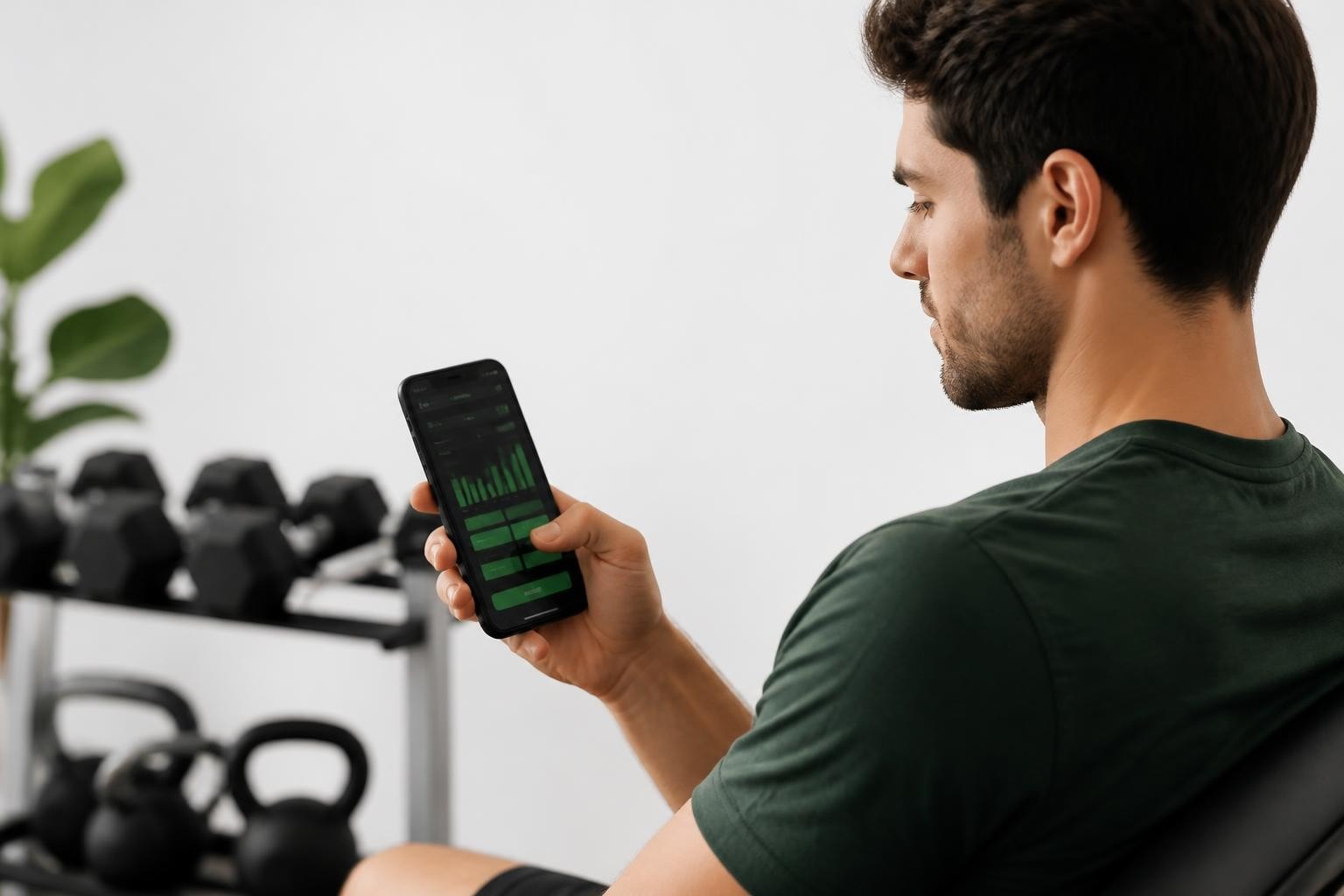
Finding the right fitness app can transform your workout routine from inconsistent to methodical. This Fitbod review examines one of the most popular AI-powered workout planning apps on the market today. By analyzing data from official sources, user reviews across multiple platforms, and community feedback, we'll help you determine whether Fitbod deserves a place in your fitness arsenal. Whether you're a beginner looking to build muscle or an experienced lifter seeking structured programming, understanding what Fitbod truly delivers is essential before committing to a subscription.
What Makes Fitbod Different From Other Workout Apps
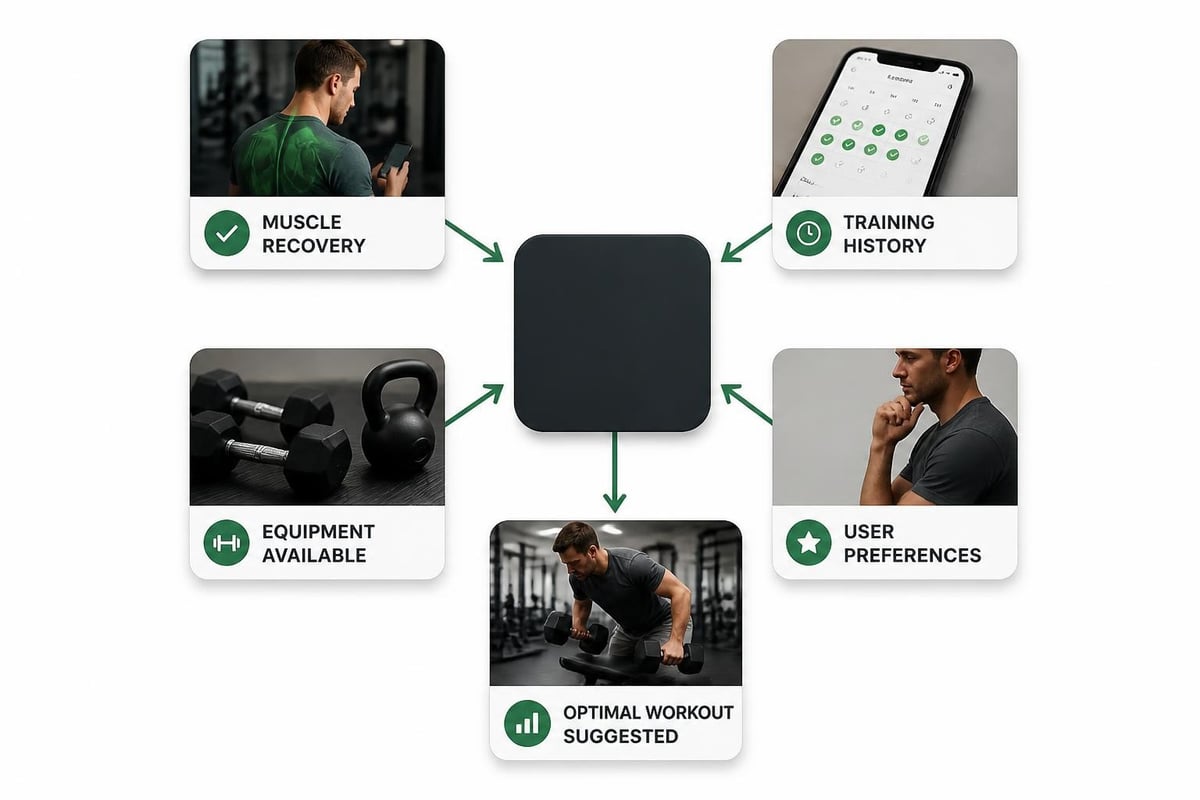
Fitbod positions itself as an intelligent workout companion that learns from your training history and adapts accordingly. Unlike static workout programs, the app generates personalized routines based on several factors including your available equipment, target muscle groups, and previous performance data.
The core technology relies on machine learning algorithms that track your progress across thousands of exercises. Each time you complete a workout, the system adjusts future recommendations to optimize for muscle recovery and balanced development. This approach aims to prevent overtraining specific muscle groups while ensuring consistent progress toward your goals.
Key differentiators include:
- Dynamic workout generation that changes daily based on recovery status
- Exercise library containing over 1,000 movements with video demonstrations
- Equipment flexibility allowing gym or home workout configurations
- Progress tracking with visual charts showing strength gains over time
- Muscle recovery algorithms that distribute training volume intelligently
According to TechRadar’s comprehensive review of Fitbod, the app excels particularly in strength training scenarios where users have access to varied equipment. The adaptive nature means no two workout weeks look identical, keeping training fresh while following progressive overload principles.
Fitbod Features Breakdown
Workout Customization Options
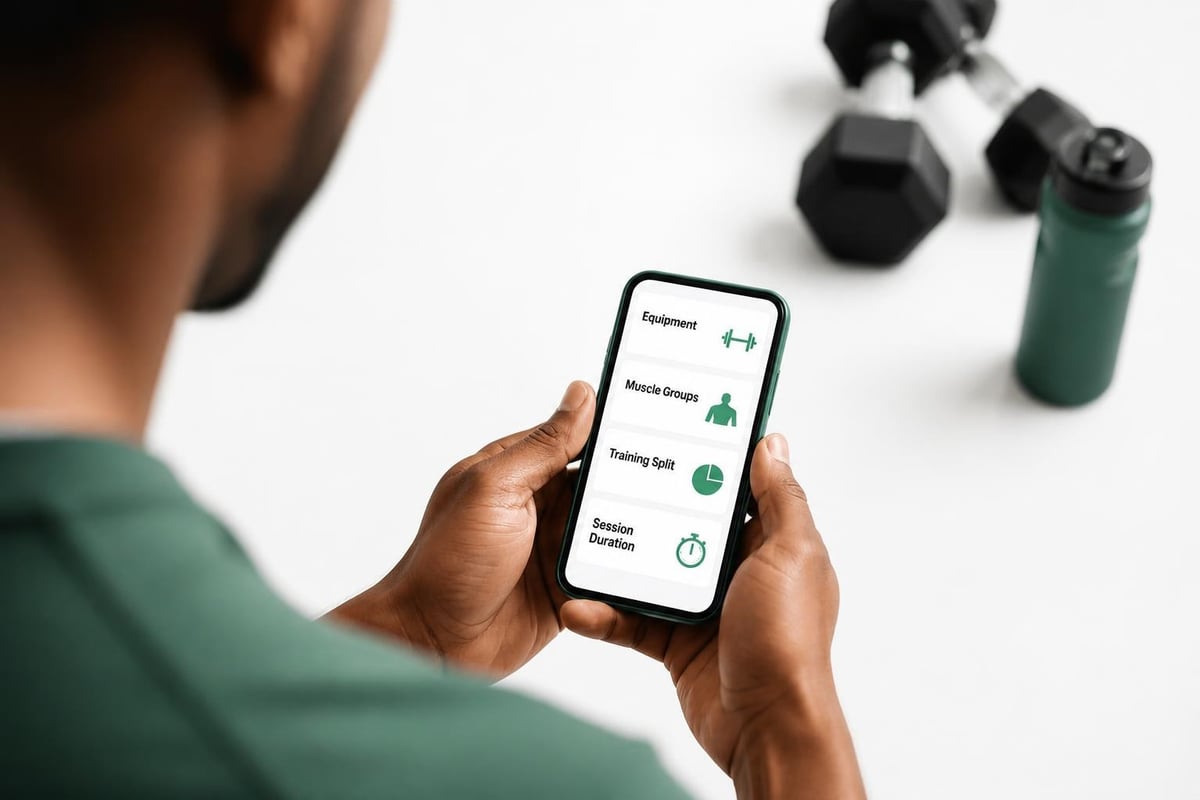
Fitbod offers extensive customization that caters to different training environments and preferences. Users begin by selecting available equipment, which can range from full commercial gym access to minimal home setups with just dumbbells or bodyweight exercises.
The app supports various training splits including push-pull-legs, upper-lower body divisions, and full-body routines. You can specify workout duration from quick 20-minute sessions to comprehensive 90-minute training blocks. This flexibility makes Fitbod suitable for busy professionals and dedicated athletes alike.
| Customization Category | Options Available |
|---|---|
| Training Split | Push-Pull-Legs, Upper-Lower, Full Body, Custom |
| Workout Duration | 20-90 minutes (adjustable) |
| Equipment Access | 20+ equipment types from bodyweight to specialty machines |
| Muscle Group Focus | Individual muscle targeting or balanced programming |
| Experience Level | Beginner, Intermediate, Advanced |
Exercise Library and Instruction Quality
The exercise database contains over 1,000 movements with detailed instructions. Each exercise includes video demonstrations, written cues, and muscle activation diagrams. This comprehensive approach helps users maintain proper form, which is particularly valuable for beginners who might not have access to personal trainers.
User feedback from Apple App Store reviews frequently mentions the quality of exercise instructions as a standout feature. Many reviewers note that the visual guides helped them discover new exercises and correct long-standing form issues.
Progress Tracking and Analytics
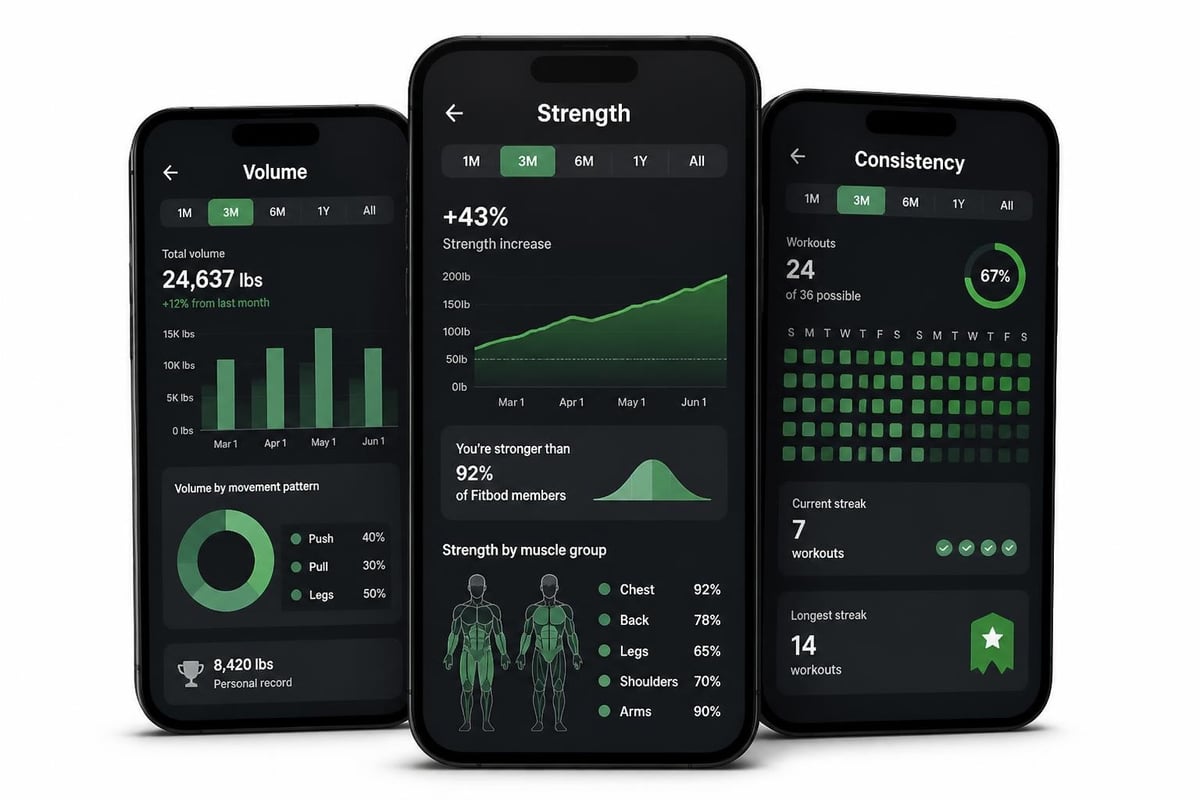
Fitbod automatically logs every set, rep, and weight you complete. The app transforms this data into visual charts showing strength progression across different exercises and muscle groups. You can view trends over weeks or months, making it easy to identify plateaus and celebrate victories.
The analytics dashboard displays:
- Total volume lifted over time
- Personal records for individual exercises
- Muscle group training frequency and volume distribution
- Workout consistency streaks
- Estimated one-rep max calculations
Pricing Structure and Value Assessment
Understanding the cost structure is crucial for this Fitbod review. The app operates on a freemium model with significant limitations on the free version. While you can test basic functionality without payment, accessing the full feature set requires a subscription.
Current pricing as of 2026:
- Monthly subscription: $12.99
- Annual subscription: $79.99 (approximately $6.67 per month)
- Lifetime access: $199.99 (one-time payment)
The annual plan offers roughly 48% savings compared to paying monthly. For users committed to long-term strength training, the lifetime option provides the best value, essentially paying for itself after 30 months compared to the monthly rate.
According to analysis from Lasta’s detailed Fitbod review, the pricing falls into the mid-range category when compared to similar fitness apps. While more expensive than basic tracking apps, it costs significantly less than personalized online coaching programs that offer comparable workout customization.
What You Get With Paid Access
Premium subscribers unlock the complete Fitbod experience including unlimited workout generation, full exercise library access, and comprehensive progress analytics. The subscription also removes workout logging limits and provides cloud backup for your training history.
Free users face restrictions including limited workout logs per month and reduced access to the exercise database. These limitations make the free version primarily useful for trial purposes rather than sustained use.
User Experience and Interface Design
The app interface emphasizes simplicity without sacrificing functionality. Upon opening Fitbod, users immediately see their next recommended workout with options to customize or generate alternatives. The main navigation provides quick access to workout history, exercise library, and progress charts.
During workouts, the interface displays clear instructions for each exercise alongside easy-to-use logging controls. Swiping gestures allow rapid navigation between exercises, while rest timers automatically count down between sets. This streamlined approach minimizes phone interaction time, keeping focus on the actual training.
Mobile App Performance
Fitbod maintains consistent performance across both iOS and Android platforms. Users report minimal bugs or crashes in recent versions, though some earlier iterations faced stability issues that have since been addressed through updates.
The app functions primarily online but includes offline capabilities for accessing downloaded workouts. This feature proves valuable for gym environments with poor cellular reception or users wanting to conserve data.
Real User Feedback Analysis
Gathering perspectives from multiple platforms provides a balanced view for this Fitbod review. Analysis of feedback from Reddit discussions, Trustpilot reviews, and app store ratings reveals consistent patterns in user experiences.
Positive User Sentiments
Users frequently praise Fitbod's ability to maintain workout variety while following structured progression principles. Many reviewers note significant strength gains after several months of consistent use, particularly those who previously struggled with creating effective workout plans independently.
The comparison from CompareWorkoutApps highlights that users appreciate not needing to think about exercise selection or programming variables. The app handles these decisions, allowing users to focus purely on execution and effort.
Common positive themes include:
- Effective muscle recovery management preventing overtraining
- Excellent exercise variety keeping workouts engaging
- Clear progress visualization motivating continued effort
- Helpful for gym beginners unsure about equipment usage
- Time-efficient workout generation
Criticism and Limitations
No fitness app is perfect, and Fitbod has identifiable weaknesses based on user feedback. Some experienced lifters find the algorithm occasionally suggests suboptimal exercise selections or volume distribution that doesn't align with advanced programming principles.
Users focused on specific strength goals like powerlifting report that Fitbod works better for general strength development than specialized competition preparation. The app tends toward balanced muscle development rather than maximizing performance in specific lifts.
| User Complaint | Frequency | Validity Assessment |
|---|---|---|
| Exercise recommendations sometimes illogical | Moderate | Valid for advanced users |
| Subscription cost too high | High | Subjective value judgment |
| Limited cardio and HIIT integration | Moderate | Valid – primarily strength-focused |
| Customization requires frequent adjustments | Low | Learning curve issue |
| Progress tracking lacks certain metrics | Low | Minor feature gap |
Fitbod for Different User Profiles
Beginners and Newcomers
This Fitbod review finds the app particularly valuable for beginners who feel overwhelmed by gym equipment and exercise selection. The guided approach removes decision paralysis while teaching proper movement patterns through quality instructional content.
Yahoo Health’s review examining Fitbod for beginners confirms the app provides appropriate progression for newcomers without requiring extensive fitness knowledge. The automatic scaling based on performance prevents beginners from attempting weights beyond their current capabilities.
Intermediate Lifters
Users with 1-3 years of training experience often find Fitbod hits a sweet spot for their needs. These individuals understand basic exercises but appreciate having programming handled automatically. The variety keeps training interesting while the progression algorithms ensure continued advancement.
Advanced Athletes and Specific Goals
Experienced lifters with specialized goals may find Fitbod limiting. While the app handles general strength development well, it lacks the nuance required for peaking cycles, competition preparation, or sport-specific training. Advanced users often report needing to manually adjust recommendations frequently, reducing the automation benefit.
How Fitbod Compares to Alternatives
The fitness app market contains numerous competitors, each with distinct strengths. Understanding where Fitbod stands relative to alternatives helps potential users make informed decisions.
Fitbod vs. JEFIT: JEFIT offers more manual control and community features but requires users to create their own programming. Fitbod automates workout generation but provides less social interaction.
Fitbod vs. Strong: Strong excels as a workout logger with excellent tracking capabilities but doesn't generate workouts automatically. Fitbod creates complete programs but has less customizable logging features.
Fitbod vs. Caliber/Future: Personal training apps like Caliber provide human coaches but cost 3-5 times more than Fitbod. Fitbod offers AI-driven programming at significantly lower cost without personalized human feedback.
According to Cora Health’s comparison of Fitbod with similar applications, Fitbod occupies a unique position by balancing automation, customization, and affordability. Users wanting more control might prefer manual logging apps, while those seeking human interaction should explore coaching platforms.
Technical Performance and Updates
Fitbod's development team maintains regular update cycles addressing bugs, adding exercises, and refining algorithms. The company demonstrates commitment to improvement based on user feedback, with significant feature additions appearing several times annually.
Recent updates in 2026 have focused on improving the AI recommendations to better handle advanced training scenarios and expanding the exercise library with more movement variations. The team also enhanced the analytics dashboard with additional metrics requested by the user community.
Privacy and Data Security
The app collects workout data, body metrics, and usage patterns to provide personalized recommendations. Fitbod's privacy policy outlines data collection practices and storage protocols. Users concerned about fitness data privacy should review these policies before committing personal information.
Data synchronization occurs through cloud storage, allowing access across multiple devices. This convenience comes with the standard considerations regarding third-party data storage that apply to most modern applications.
Maximizing Results With Fitbod
Getting optimal results requires more than simply following generated workouts. Users who achieve the best outcomes typically implement several strategies alongside the app's recommendations.
Best practices for Fitbod users:
- Accurately log all sets and reps to ensure proper algorithm learning
- Provide honest feedback about exercise difficulty using the rating system
- Regularly update available equipment to receive appropriate recommendations
- Review workout previews and swap exercises that don't fit your goals
- Track nutrition alongside training for comprehensive progress
- Take scheduled deload weeks to support recovery despite app recommendations
The app works best when users remain consistent over extended periods. Short-term trials don't allow sufficient time for the algorithm to learn individual response patterns and optimize recommendations effectively.
Platform Availability and Compatibility
Fitbod operates as a mobile-first application available on both iOS and Android platforms. The app requires relatively modern devices running recent operating system versions for optimal performance.
There is currently no dedicated web interface, which some users find limiting when planning workouts from computers. All functionality resides within the mobile applications, requiring a smartphone or tablet for access.
Integration Capabilities
Fitbod offers limited integration with third-party platforms compared to some competitors. While it can sync with Apple Health and Google Fit for basic data sharing, it doesn't connect with many popular fitness tracking devices or nutrition apps.
Users seeking comprehensive ecosystem integration across multiple health apps may find these limitations frustrating. However, those focused primarily on strength training may not require extensive third-party connections.
Making Your Decision
This Fitbod review has examined the app from multiple angles including features, pricing, user feedback, and practical application. The decision to subscribe ultimately depends on your specific situation, goals, and preferences.
Fitbod makes sense if you:
- Want structured strength training without hiring a personal trainer
- Have access to varied gym equipment or a well-equipped home gym
- Prefer automated programming over manual workout planning
- Value exercise variety and balanced muscle development
- Need clear exercise instructions and form guidance
Consider alternatives if you:
- Require specialized programming for powerlifting or Olympic weightlifting competitions
- Prefer complete manual control over every programming variable
- Focus primarily on cardio, HIIT, or non-strength activities
- Want extensive social features and community interaction
- Need human coaching feedback and accountability
The app has earned positive reception across review platforms, with most users reporting satisfaction with the workout quality and progression. However, the subscription cost remains a consideration, particularly for budget-conscious fitness enthusiasts who might find free alternatives adequate for their needs.
Fitbod delivers solid value for individuals seeking structured, intelligent strength training programming without the cost of personal coaching. The AI-driven approach works well for beginners through intermediate lifters, though advanced athletes might find limitations in specialized training scenarios. When evaluating health and fitness apps, understanding both official features and real user experiences provides the complete picture. HealthGreenList aggregates data from brand claims, user reviews, social feedback, and multiple sources to help you assess whether Fitbod and other wellness brands truly deliver on their promises, making your health technology decisions more informed and confident.